Oral Cancer Screening by Your Dentist | What an Oral Cancer Exam Looks For
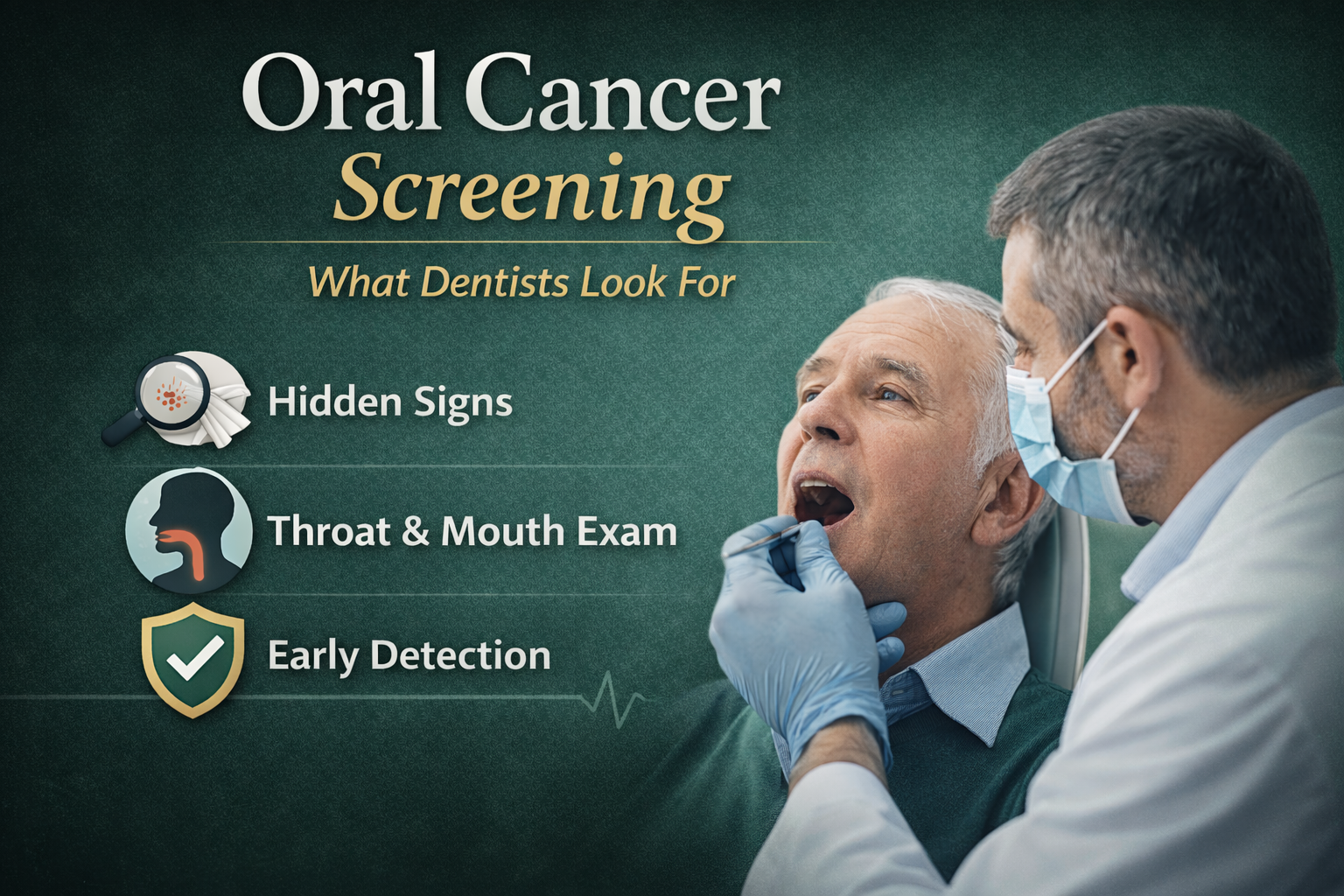
Oral Cancer Screening: What Dentists Look for That Patients Can’t See
When people think about oral cancer, they often imagine obvious sores or visible lumps. The reality is more complicated. Many early signs of oral cancer are subtle, painless, and easy to miss without professional training.
That is why routine oral cancer screenings are such an important part of your dental exam. At Smiles One in Pittsburgh, oral cancer screening is not an afterthought. It is a deliberate, clinical evaluation designed to catch changes early, when treatment is most effective.
Here is what dentists are trained to look for during an oral cancer exam, and why these screenings matter even if you feel fine.
What Is an Oral Cancer Screening?
An oral cancer screening is a focused examination of the mouth, throat, and surrounding tissues to identify abnormal changes that could indicate oral cancer or precancerous conditions.
It is quick, noninvasive, and typically performed during your routine dental visit. Most patients do not even realize how much information your dentist is gathering during those few minutes.
What Dentists Look for That Patients Often Miss
Dentists are trained to detect early changes that do not always cause pain or visible symptoms. During an oral cancer screening, we evaluate far more than just your teeth.
Subtle tissue changes
We look for areas of tissue that appear unusually red, white, thickened, or textured. These changes can be early warning signs even when there is no discomfort.
Lumps or firmness beneath the surface
By gently feeling areas of the jaw, neck, and mouth, dentists can detect firmness or masses that are not visible to the eye.
Asymmetry or changes over time
Small differences between the left and right sides of the mouth, or changes compared to prior visits, can be meaningful. Tracking consistency over time is something only regular dental exams provide.
Areas that do not heal properly
A sore that lingers longer than expected, even if it does not hurt, may raise concern and warrant closer monitoring or referral.
Common Areas Examined During an Oral Cancer Exam
Oral cancer can develop in several locations, which is why the screening is comprehensive.
Dentists examine:
- The tongue, including the sides and underside
- The floor of the mouth
- The roof of the mouth
- The inside of the cheeks
- The lips
- The throat and tonsillar area
- The jaw and neck
Many of these areas are difficult or impossible for patients to examine accurately on their own.
Who Is at Risk for Oral Cancer?
Oral cancer does not affect only one type of patient. While certain factors increase risk, anyone can develop it.
Higher-risk factors include:
- Tobacco use, including smoking and smokeless tobacco
- Heavy alcohol use
- HPV exposure
- Prolonged sun exposure to the lips
- A history of oral cancer or precancerous lesions
That said, oral cancer is increasingly being diagnosed in patients without traditional risk factors. This is one of the reasons routine screenings are so important.
Why Early Detection Matters
When oral cancer is caught early, treatment outcomes improve significantly. Early-stage lesions are often easier to treat and less likely to require extensive surgery or long-term complications.
Unfortunately, oral cancer is frequently diagnosed later because early signs are easy to overlook. Regular screenings give patients the best chance of identifying issues before they become serious.
What Happens If Something Looks Concerning?
If your dentist notices an area that looks abnormal, it does not automatically mean cancer. Many findings are benign or inflammatory in nature.
Depending on what is observed, next steps may include:
- Monitoring the area over time
- Recommending changes to reduce irritation
- Referring you to a specialist for further evaluation
- Recommending a biopsy if appropriate
Our goal is clarity, not alarm. We walk patients through findings carefully and explain what they mean in plain language.
Why Dentists Play a Critical Role in Oral Cancer Screening
Most people see their dentist more often than their primary care physician. That puts dental teams in a unique position to notice changes early.
Dentists are trained to recognize abnormalities specific to oral tissues and to distinguish between normal variations and potential concerns. This expertise is why oral cancer screening is considered a standard of care in comprehensive dentistry.
How Often Should You Be Screened?
Oral cancer screening is typically performed at every routine dental exam for adults. For patients with higher risk factors, screenings may be more closely monitored.
If you have not been to the dentist in a while, or if your last visit did not include a screening, it is worth asking about it at your next appointment.
Your Health, Beyond Your Teeth
Dental visits are about more than cavities and cleanings. They are an opportunity to protect your overall health.
At Smiles One, we believe patients deserve thorough, thoughtful care. Oral cancer screening is one of the many ways we look out for your long-term well-being, even when there are no obvious symptoms.
Schedule an Oral Cancer Screening in Pittsburgh
If it has been a while since your last dental exam, or if you have questions about oral cancer screening, our team is here to help.
Request an appointment with Smiles One in Pittsburgh and take an important step toward protecting your health. Early detection saves lives, and it starts with a routine visit.


